How Improper Grading Around Your Foundation Causes Water Damage
Double B Excavations & Grade LLC
The Problems Hiding in Plain Sight
WHY SMALL GRADING ISSUES AROUND YOUR FOUNDATION MATTER MORE THAN YOU THINK
Out in Columbus this morning, we're tackling what might look like minor issues to most homeowners.
A sunken spot where an AC unit used to sit. Some concrete that's tilted the wrong way.
The kind of things you walk past every day without thinking twice about them.
But here's what I've learned after years of doing this work: these "small" problems are actually warning signs of something much bigger.
When water starts flowing toward your foundation instead of away from it, you're on a countdown to expensive repairs.
The good news? Catching these issues early means fixing them is straightforward and affordable.
Today's project is a perfect example.
We'll spend more time driving to this Columbus property than we will actually doing the work.
But that quick fix? It's preventing thousands of dollars in foundation damage down the road.
That's the kind of work that matters most - the kind that stops small problems before they become big ones.
Welcome to Double B!
Understanding the Problem
Let's talk about something simple: water always flows downhill. It follows gravity, and it follows the slope of whatever surface it's on. This isn't complicated stuff - it's just basic physics. But when it comes to y
our foundation, this simple fact becomes really important.
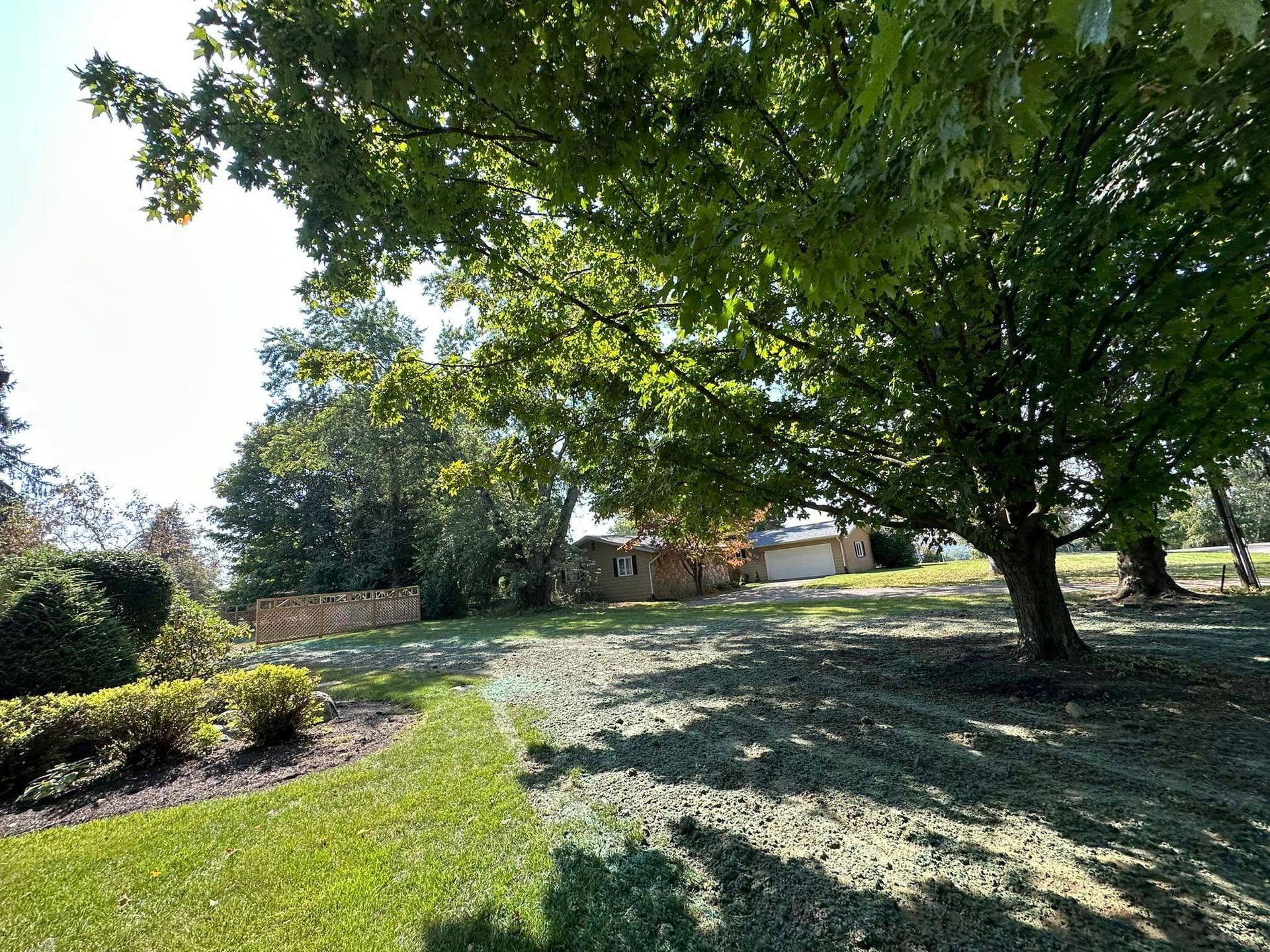
Proper grading means the ground around your foundation slopes away from your house. Even a small slope - just a few inches over several feet - is enough to send water in the right direction. When everything's working correctly, rainwater hits your property and flows away from your foundation, not toward it.
The problem is that grading doesn't stay perfect forever. Things change over time. You remove an old AC unit and suddenly there's a divot in the ground. Concrete settles and shifts, creating new slopes that point the wrong direction. Even normal settling of the soil can change how water flows across your property.
And here's the thing most people don't realize: water is patient. It doesn't need a big crack or a major flaw to cause damage. Give it a path toward your foundation, and it'll follow that path every single time it rains. Day after day, month after month, year after year. That's how small grading problems turn into big foundation issues.
Two Real Examples from Our Columbus Project
Let me show you exactly what we're dealing with on this Columbus property, because these are the kinds of issues that show up on homes all over Ohio..
The Sunken AC Pad
First up is the area where the AC unit used to sit. When they pulled that unit off for the season, it left behind a divot - basically a bowl-shaped depression in the ground. Now, it's November, so they don't need air conditioning right now. But that sunken area? It's already doing damage.
Think about what happens when it rains. Water flows across the property, hits that low spot, and just sits there. It pools up like a little pond right next to the foundation. That standing water has nowhere to go except down into the soil or sideways toward the foundation wall. Neither option is good for the house.
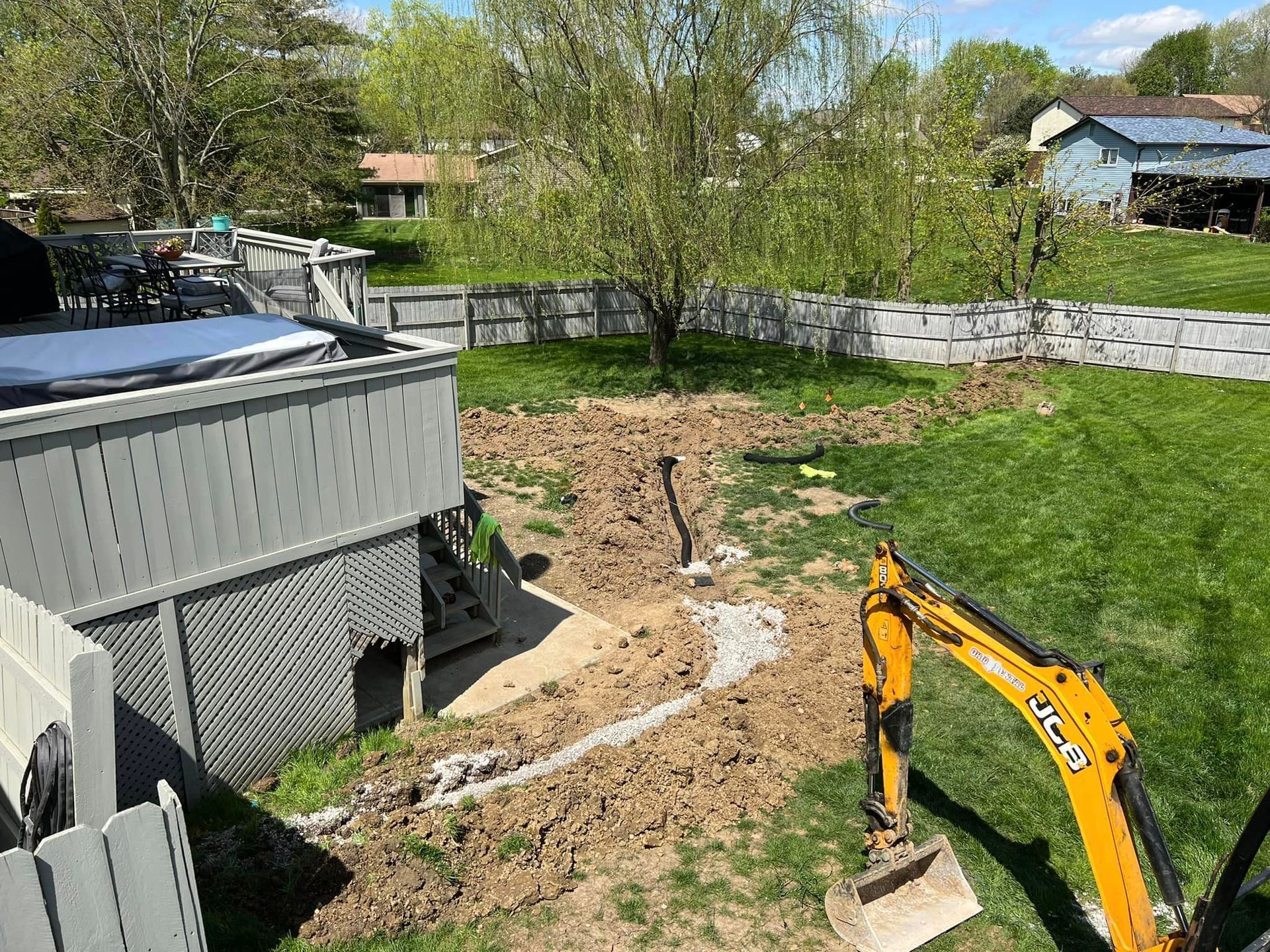
We're pulling up the pavers in that area and regrading everything to match the natural drainage pattern. There's already a swale - that's a shallow drainage channel - running through the property. We just need to make sure this area flows with it instead of fighting against it.
The Folded Concrete Problem
The second issue is even more common. We've got three sections of concrete that have settled and folded over time. Instead of sloping away from the foundation like they should, they're now directing water right back toward the house.
This happens more than you'd think. Concrete is heavy, and the ground underneath it settles. Sometimes it settles evenly, sometimes it doesn't. When it tilts the wrong direction, you've created a perfect water slide pointing straight at your foundation.
We're removing those problem sections, bringing in some fill dirt, and regrading the area to restore proper drainage. We might need to cut down one section slightly to get everything flowing the right direction. Then we'll build up grass around the edges to hold everything in place naturally.
Warning Signs Homeowners Should Watch For
You don't need to be an excavation expert to spot these problems around your own home. Here's what to look for:
Walk around your foundation after a good rain. Do you see water pooling anywhere near the house? That's your first red flag. Water should be flowing away, not sitting still.
Check your concrete - sidewalks, patios, anything close to the foundation. Has any of it tilted or shifted? Get down and look at the angle. If it's sloping back toward your house instead of away, you've got a problem brewing.
Look for sunken areas, especially where you've had utilities, AC units, or other equipment removed. These spots turn into collection points for water, and they're usually pretty easy to spot if you're looking for them.
Inside your basement or crawlspace, watch for signs of moisture. Damp spots on walls, musty smells, or actual water intrusion - these are all signs that water is finding its way to your foundation from outside.
And don't ignore cracks in your foundation walls. Small hairline cracks might not be a big deal on their own, but if you're also seeing water pooling outside or moisture inside, those cracks are telling you that water pressure is building up around your foundation.
The Fix: Proper Grading Solutions
So what do you actually do about these problems? Let's walk through the solution, using our Columbus project as the example.
First, you've got to remove whatever's causing the problem. In our case, that means pulling up those pavers from the sunken AC pad area and removing the sections of tilted concrete. You can't grade properly if you're working around problem materials.
Next comes establishing the right slope. The general rule is simple: you want the ground to slope away from your foundation at least six inches over the first ten feet. That's enough to move water in the right direction without creating drainage problems somewhere else on your property.
Here's where it gets important to work with what's already there. This Columbus property has a natural swale running through it - that's the land's way of moving water. We're not fighting against that. Instead, we're making sure our grading work connects properly with that existing drainage pattern.
Once we've got the slope right, we build up the edges with soil and establish grass. This isn't just for looks - that grass and soil create a stable surface that holds the grade in place over time.
Now, can you DIY this kind of work? Sometimes. If you're dealing with a small sunken area and you're comfortable moving dirt around, you might be able to handle it yourself. But if you're removing concrete, working near utility lines, or dealing with multiple drainage issues, it's worth bringing in someone who does this regularly. The cost of doing it wrong the first time usually exceeds the cost of hiring it done right.

Taking the Next Step
Walk around your property this week and look for these issues. Really look. Check the slope of your concrete. Notice where water goes when it rains. Look for those sunken spots and tilted sections.
If you spot problems around your foundation in central Ohio, we're here to help. Sometimes a quick assessment is all it takes to give you peace of mind. Other times, we'll find issues that need addressing before they turn into expensive repairs. Either way, you'll know exactly where you stand.
Because at the end of the day, protecting your foundation isn't complicated. It just takes paying attention to the details and fixing small problems before they become big ones. That's what we were doing in Columbus today, and that's what we can help you do too.